
Search in Category
Filter Your Search
Thickness
Color Group
Categories
Shop All 2 Piece Rain Suits - 3 Piece Rain Suits - Jackets for Rain Suits
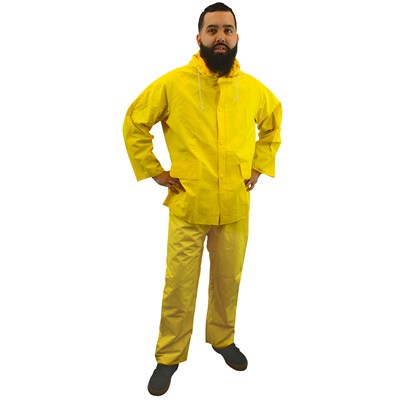
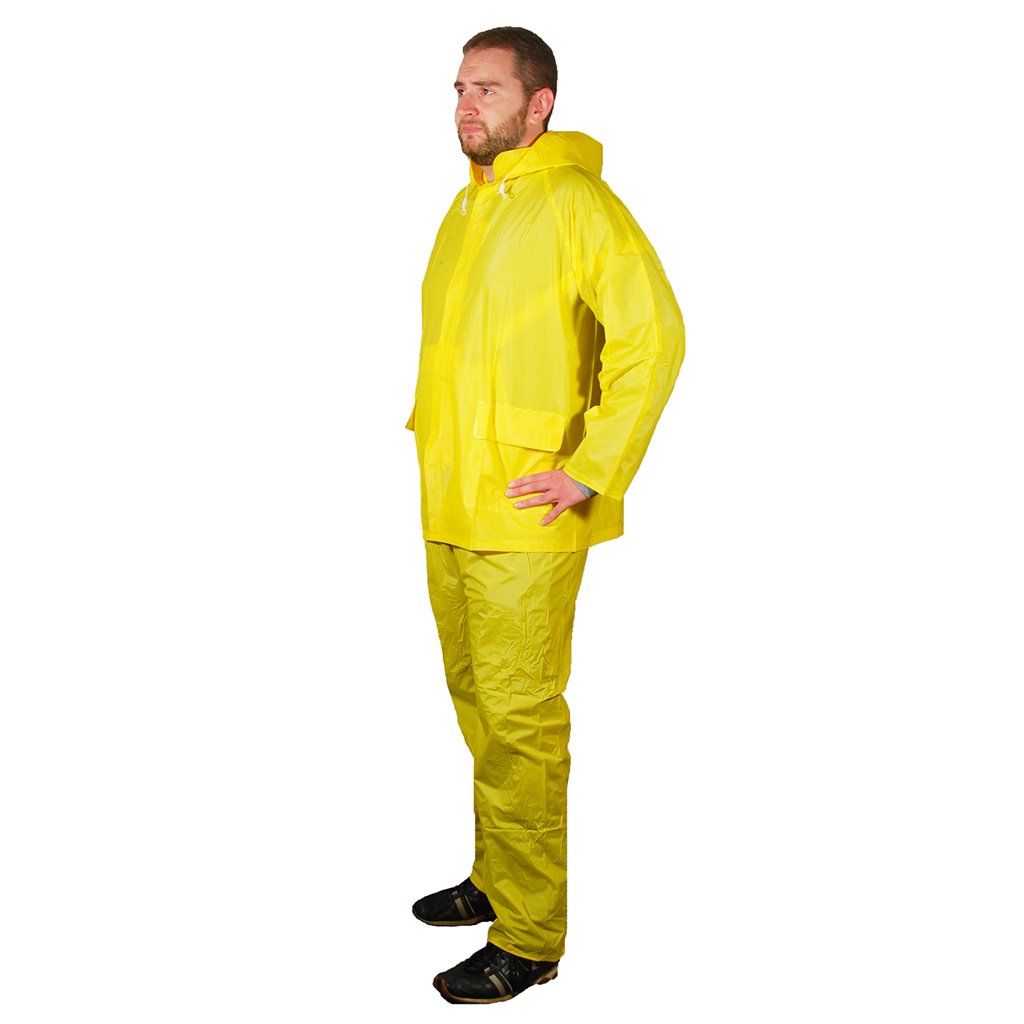
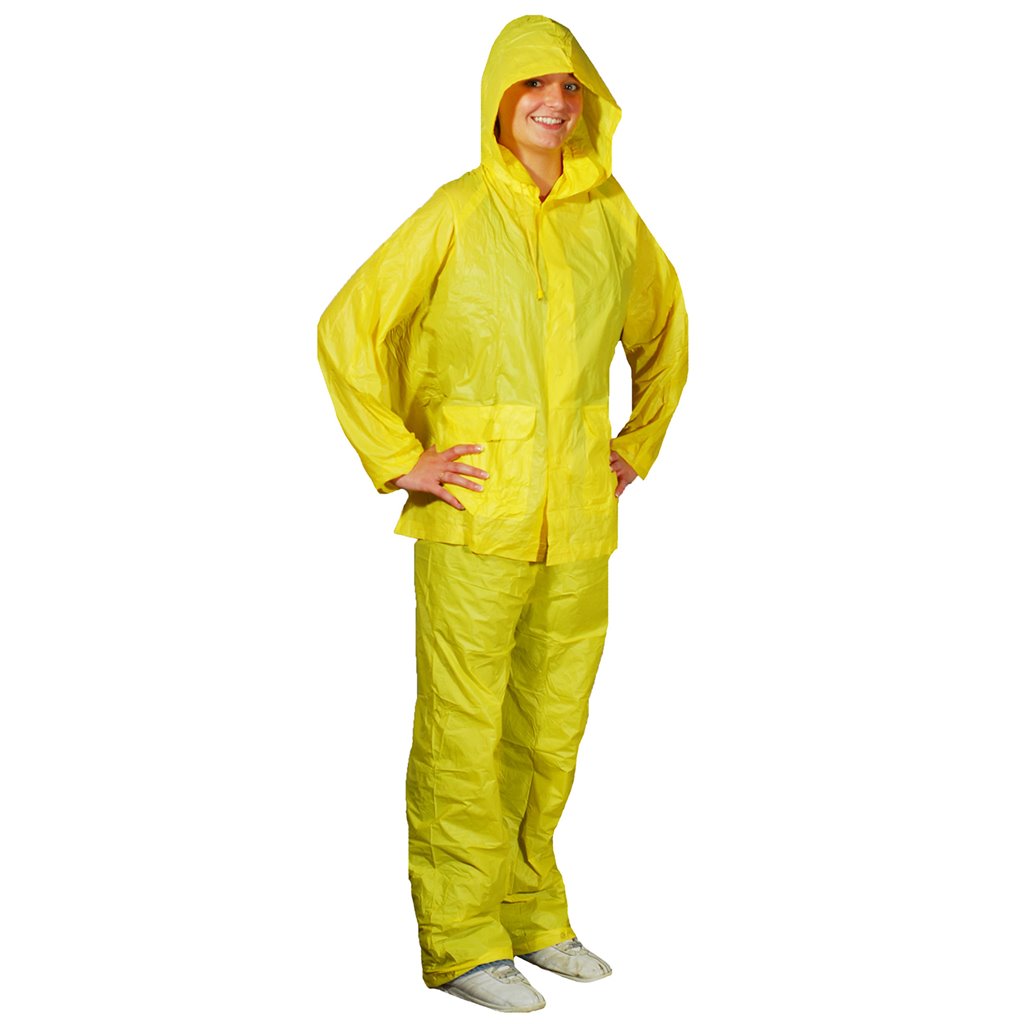
Heavyweight 3-Piece Rainsuit YLW
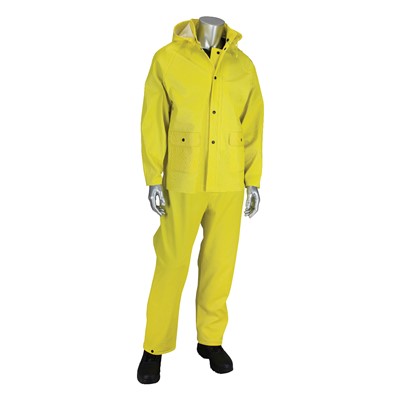
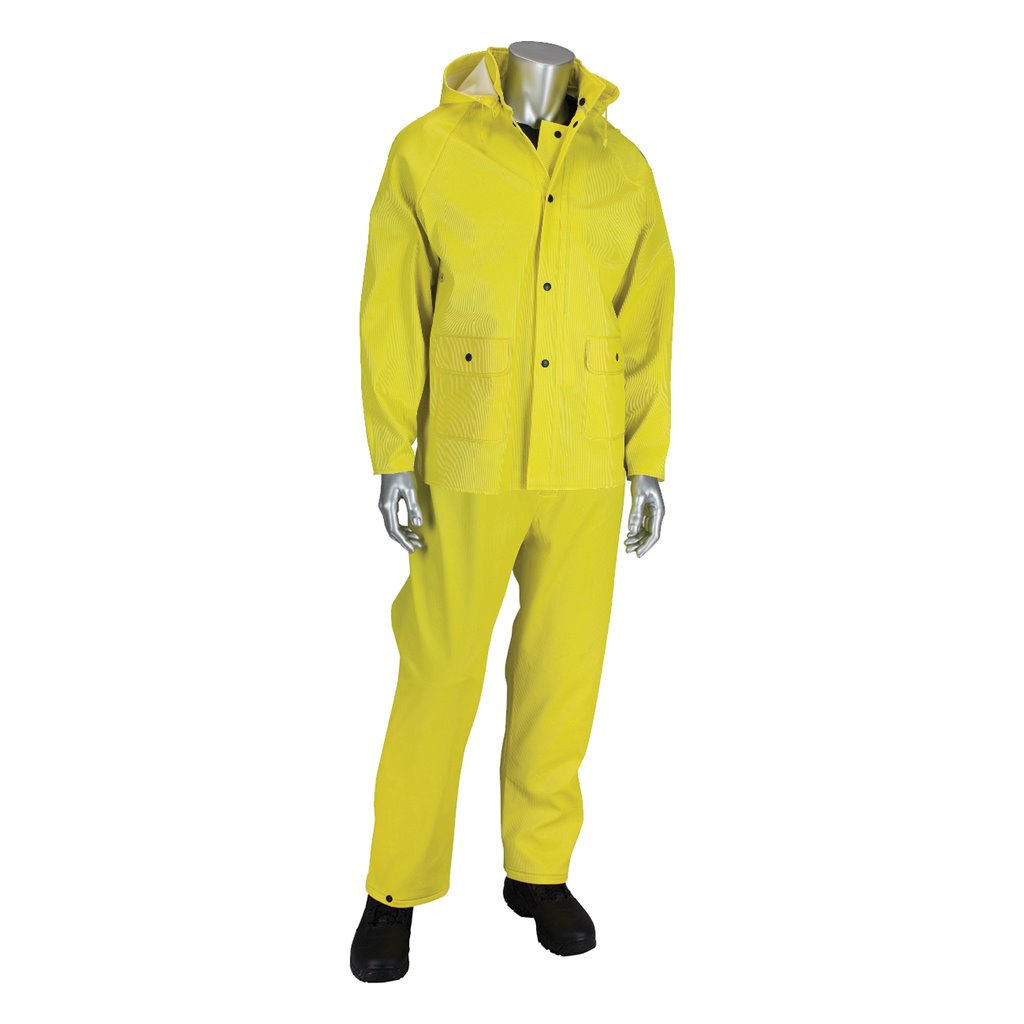
PIP Flex Ribbed 3-Piece Rainsuit YLW
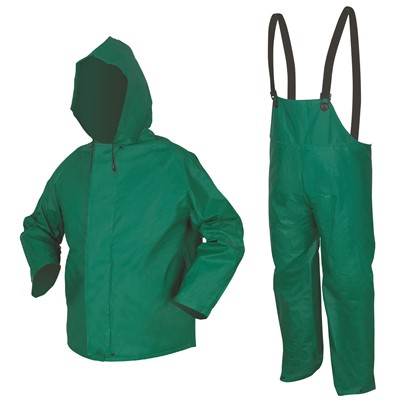
MCR Dominator 2-Piece Rainsuit GRN
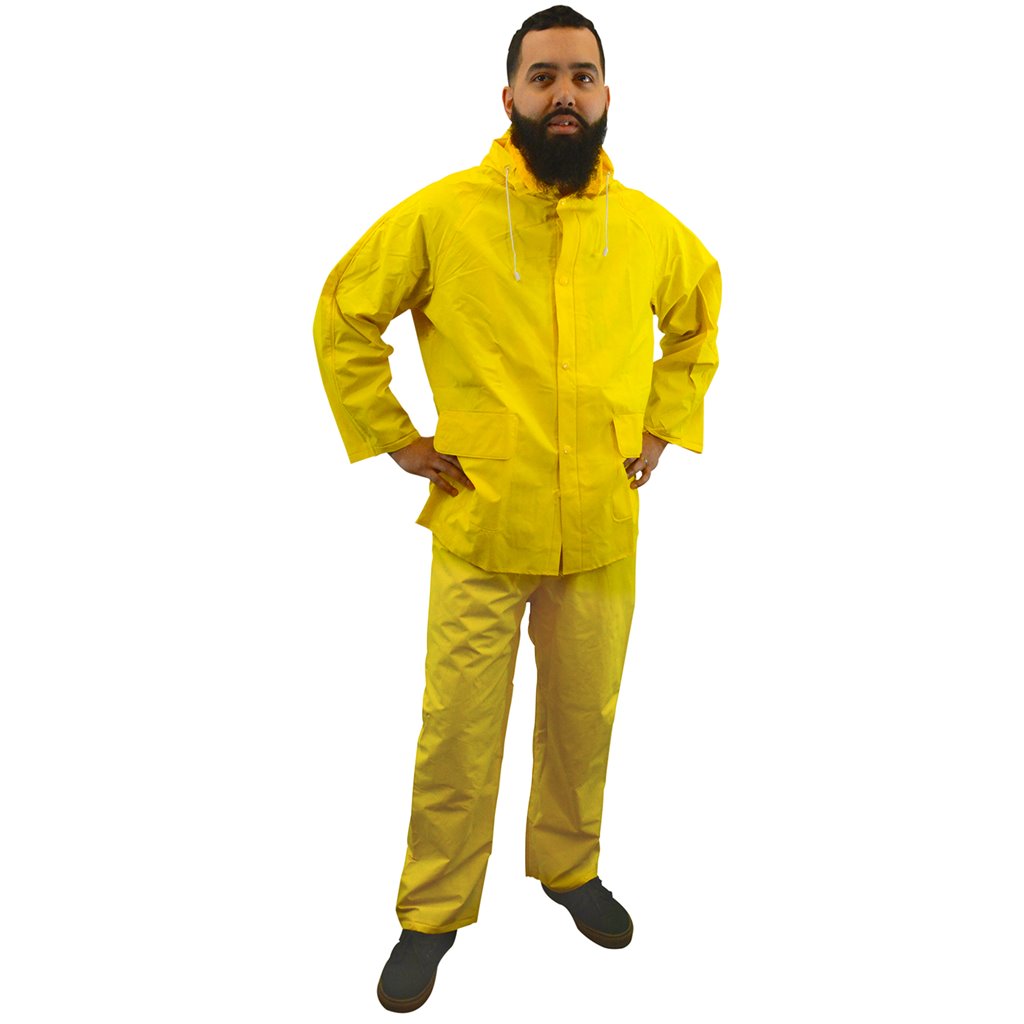
Mediumweight 3-Piece Rainsuit YLW
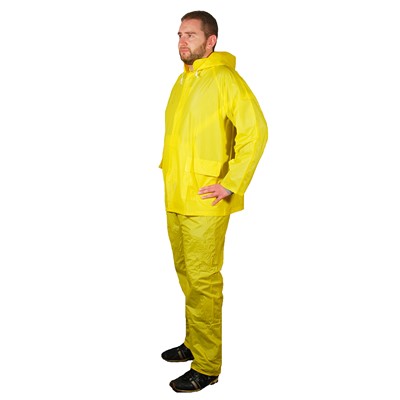
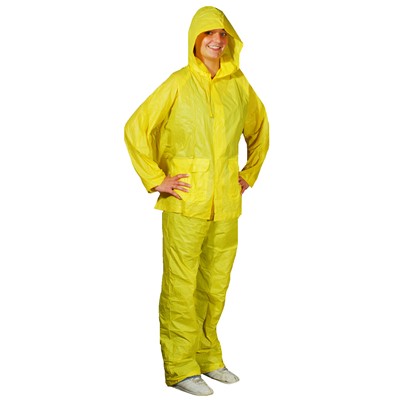
Lightweight 3-Piece Rainsuit YLW
Don't see what you need?
Click here to let us know and we'll help you find what you're looking for.Rain Suits for Work—Waterproof Two-Piece & Heavy-Duty Rainsuits for Outdoor Crews
A work rain suit is a matched two- or three-piece waterproof garment system—jacket and pant, or jacket, bib, and hood—designed for sustained outdoor use in heavy rain. Professional-grade rainsuits use PU-coated or PVC-coated fabrics, sealed seams, and storm-flap closures to deliver full-body waterproof protection in construction, agricultural, and industrial environments.
The Professional Standard in Work Rain Suits for Outdoor Crews
A standalone rain jacket handles light showers. A professional rain suit handles the job site in a sustained downpour—because when a jacket ends at the hip and rain runs straight into your trousers, productivity and comfort both collapse within minutes. The full-body waterproof protection of a matched jacket-and-pant rainsuit is the engineering solution to that problem, and it is the reason waterproof rain suits remain the first-choice rain protection system for construction crews, utility workers, agricultural teams, and anyone whose job does not stop because of weather.
Masterman's has supplied New England's industrial and construction workforce with professional PPE since 1961. This catalog covers rain suits from the broadest range of professional configurations: two-piece suits pairing a hooded rain jacket with a matching pant or bib, three-piece systems adding a separate hood, ANSI-compliant hi-vis rainsuits for road and traffic work, and standalone jacket-only options for workers who already own compliant bottoms. Every configuration is available at competitive B2B pricing for single units or crew-scale bulk orders.
Shop Rain Suits by Configuration
Masterman's rainsuits catalog is organized by suit configuration. Select the format that matches your crew's requirements:
|
Configuration |
Best for |
Browse |
|
2-piece rain suits (jacket + pant) |
Construction, landscaping, utility—full-body coverage for sustained rain |
|
|
3-piece rain suits (jacket + bib + hood) |
Agriculture, heavy industry, sustained downpour in exposed locations |
|
|
Jackets only (rain suit tops) |
Workers pairing with existing waterproof bottoms or bib-overalls |
|
|
Hi-vis rain suits (ANSI Class 2 & 3) |
Road construction, traffic control—ANSI Type R compliance required |
What Separates Professional Work Rain Suits from Consumer-Grade Rainwear
Full-Body Waterproof Architecture
A full body rain suit functions as a waterproof envelope around the worker—jacket, pant, and optionally a hood forming a sealed system against water ingress. The defining technical characteristics of professional-grade heavy duty rain suits are fabric weight, seam construction, and closure design. Consumer rainwear uses water-resistant coatings that repel light spray but fail in sustained heavy rain. Professional work rainsuits use fully waterproof PU or PVC-coated outer fabrics with either taped or welded seams—closing the water pathway at the seam line, not just at the surface.
Key construction features to verify before purchase:
- Seam construction: Sealed or taped seams prevent water tracking along the thread line—the most common point of failure in budget rainwear
- Storm flaps: Overlapping fabric behind zipper closures prevents water penetration through the zipper teeth
- Adjustable cuffs and ankle closures: Snap or Velcro cuffs seal water entry points at the wrist and ankle, especially important during physical work
- Hood integration: A fixed or detachable hood with a brim and draw-cord creates a waterproof connection between head and jacket that a collar alone cannot achieve
- Elastic waist or bib construction on pants: Ensures the jacket-pant junction remains sealed during movement
Materials: PU vs PVC for Work Rain Suits
The two dominant materials in professional waterproof rain suits serve different use cases, and understanding the difference is fundamental to specifying the right product for your crew:
|
Property |
PU-coated polyester |
PVC-coated polyester |
|
Weight |
Lightweight (75D–150D) |
Heavy (200D+) |
|
Breathability |
Better—allows moisture vapour escape |
Limited—traps heat and sweat |
|
Chemical resistance |
Moderate |
High—better for ag/industrial chemicals |
|
Abrasion resistance |
Moderate |
High—longer wearing in rough use |
|
Best for |
Construction, landscaping, outdoor work |
Agriculture, fishing, food processing, chemical handling |
For most construction and outdoor work applications, a polyester rain suit with PU coating in the 100D–150D range provides the best balance of waterproofing, breathability, and durability at a practical price point. For agricultural, fishing, and industrial chemical applications, heavier PVC construction outperforms on durability and chemical resistance despite the additional weight and reduced breathability.
ANSI Compliance for Hi-Vis Rain Suits
Workers in roadway construction, traffic flagging, and utility work near vehicle traffic require ANSI/ISEA 107-compliant high-visibility rain suits when working in wet conditions. The compliance requirement does not have a weather exception—a non-rated rainsuit does not satisfy the ANSI mandate regardless of its colour or how wet the conditions become. Masterman's stocks ANSI Class 2 and Class 3 Type R hi-vis rainsuits from Tingley, Portwest, Kishigo, and Helly Hansen—all fully compliant with current ANSI/ISEA 107-2020 standards and available in extended sizing.
For the full compliance-rated range of hi-vis rain gear, including ANSI Class 3 rainsuits and jackets, see the dedicated hi-vis rain gear category. For broader compliance workwear, including hi-vis vests, pants, and shirts, browse the full hi-vis clothing catalog.
Best Rain Suits for Work—Matched to Your Job Type
The best rain suit for work is the one correctly specified for the specific hazards, compliance requirements, and physical demands of the job. The following application guides cover the most common buyer profiles in Masterman's customer base:
Construction & Civil Engineering
Construction rain suits require a balance of durability, coverage, and—on road-adjacent sites—ANSI compliance. A heavy duty rain suit in 150D PU-coated polyester with full taped seams, storm-flap closures, and articulated pant knees is the correct specification for general construction. For sites requiring ANSI Class 3 Type R certification, specify a hi-vis compliant two-piece suit. Brands including Portwest, Tingley, and West Chester (PIP) deliver this specification at competitive bulk-order pricing. See the full rain gear catalog for all available brands and configurations.
Landscaping & Groundskeeping
Landscaping crews need lightweight rain suits that do not impede physical work—pruning, planting, equipment operation—and do not overheat during high-exertion tasks. A 75D–100D PU-coated lightweight rain suit in a two-piece configuration, worn over moisture-wicking base layers, is the standard recommendation for spring and autumn landscaping seasons when temperatures and rain intensity are moderate. The jacket should offer underarm venting or a mesh lining for heat management. Browse spring and wet-weather workwear options for curated seasonal selections.
Utility & Electrical Line Work
Utility workers face sustained rain exposure during extended outdoor shifts and often require ANSI-compliant rain suits when working near roads. Beyond compliance, utility rainsuits should offer reinforced stress points at the elbows and knees, extended torso coverage, and a pant design compatible with safety harness systems. Brands with utility-specific rainsuit lines include Tingley and Portwest. Ensure the chosen rainsuit is compatible with any fall-protection or confined-space harness equipment used on the job.
Agriculture & Farming
Agricultural rain suits must handle rough treatment—contact with tools, machinery, fertilisers, and pesticides—in addition to sustained wet weather. Heavy duty rain suits in PVC-coated construction are the standard for this application: heavier than PU alternatives but significantly more resistant to abrasion, tearing, and chemical contact. Full bib-and-jacket three-piece configurations are common in this sector, as they provide the highest level of coverage and eliminate the jacket-pant gap during physical bending and lifting tasks.
Hiking & Outdoor Recreation (Non-Occupational)
While Masterman's primarily serves B2B workwear buyers, rain suits for hiking and outdoor recreation are available in this catalog at professional-grade quality and pricing. Lightweight packable two-piece rain suits—typically sub-400g for the jacket-pant combination—are appropriate for trail use. Look for a hooded rain suit with a rated waterproof column pressure of 5,000mm or above for genuine protection in mountain or coastal conditions, rather than simply water-resistant finishes that fail in sustained rain.
Custom Screen Printing & Embroidery on Rain Suits
All rainsuits and rain jackets in this catalog are eligible for custom screen printing and embroidery through Masterman's in-house customisation service. Adding your company name, logo, job title, or safety certification marking to crew rainsuits delivers three practical advantages: crew identification on job sites with multiple contractors present, OSHA documentation support for named PPE, and professional client-facing presentation on managed sites.
The most common customisation for work rainsuits is a left-chest logo print and a job title or employee name on the back. For hi-vis compliant rainsuits, Masterman's ensures that customisation placement does not obstruct the required retroreflective striping or background fluorescent material mandated by the ANSI/ISEA 107 standard. Request a quote or upload your artwork using the customisation request form.
Frequently Asked Questions—Rain Suits
1. What are the best rain suits for heavy rain?
For sustained heavy rain, the essential construction features are fully taped or welded seams, a waterproof column pressure of 5,000mm or above, storm flaps over all zipper closures, and a fixed or adjustable hooded rain jacket. In occupational settings, Tingley, Portwest, and Helly Hansen all meet these specifications across price points. Masterman's carries stocked options from all three brands—call 1-800-525-3313 for specific product recommendations for your work environment.
2. What is the difference between a rain suit and a rain jacket?
A rain suit is a matched two- or three-piece system—jacket plus waterproof pant and optionally a hood—providing full-body protection from the neck to the ankle. A rain jacket covers only the upper body and relies on the wearer's other trousers for lower-body protection, which are typically not waterproof. For job sites where workers squat, kneel, or work in sustained rain, a full rain suit system significantly outperforms a jacket-only approach.
3. What are the benefits of a full rain suit over a jacket alone?
A full rain suit eliminates the single largest waterproofing failure point in jacket-only systems: the hip-to-trouser gap through which rain runs when a worker bends, squats, or kneels. A matched jacket-and-pant system with an elastic or adjustable waist junction seals this gap. For workers in sustained rain at any level of physical activity, a full rain suit keeps the worker dry significantly longer than a jacket paired with non-waterproof work trousers.
4. Are rain suits breathable?
Modern PU-coated polyester work rain suits provide meaningful breathability—they allow moisture vapour to escape from the interior while blocking liquid water ingress from outside. PVC-coated rainsuits are less breathable and more appropriate for chemical-resistant or agricultural applications than for high-exertion physical work in warm conditions. For maximum breathability in a waterproof work suit, look for products with underarm mesh venting, a mesh interior lining, or a breathability rating expressed in MVTR (moisture vapour transmission rate).
5. What materials are used in professional work rain suits?
Professional work rainsuits predominantly use PU (polyurethane)-coated polyester at fabric weights ranging from 75-denier for lightweight options to 200-denier or above for heavy-duty construction and agricultural applications. PVC (polyvinyl chloride) coatings are used on heavier-duty suits where chemical resistance and maximum abrasion durability are priorities. Seam construction—taped, welded, or simply heat-sealed—is as important as the outer fabric in determining the true waterproofness of the finished garment.
6. Can I wear a rain suit in winter?
A rain suit shell is not inherently insulated, so in cold and wet conditions it should be layered over thermal clothing—typically a moisture-wicking base layer and a fleece or insulated mid-layer. The rain suit outer shell prevents wind and water penetration while the layers underneath retain body heat. For very cold and wet conditions, look for an insulated rain suit with integrated thermal lining, or use Masterman's Fall & Winter Essentials range of cold-stress workwear under the rain suit shell.
7. Do rain suits come in different sizes?
Masterman's rain suits are available in sizes ranging from Small through 5XL, with most in-demand styles stocked across the full size range. For crew orders, note that rain suits are designed to be worn over workwear—workers should typically size up one from their normal garment size to ensure full range of movement when layered. Extended size availability varies by specific product; call 1-800-525-3313 or request a quote to confirm size availability before placing a bulk order.
8. Can rain suits be used in snow?
A waterproof rain suit shell provides wind and water protection in snowy conditions, but is not designed as an insulated cold-weather garment. Packed snow that melts on the suit surface will be repelled effectively. For work in cold and wet or cold and snowy conditions, layer a quality thermal system underneath the rain suit rather than relying on the shell alone for warmth. Insulated rain suit options with integral lining are available in the catalog for workers who need both waterproofing and thermal protection in a single garment.
9. Are rain suits different from ponchos?
Yes—a rain suit is a structured, fitted garment system with sealed openings at the wrists, ankles, and neck, designed for physical work in sustained rain. A poncho is a loose, single-piece waterproof covering with open sides that provides basic overhead protection but minimal waterproofing at the extremities. For any job involving physical movement, bending, or kneeling in rain, a fitted rain suit system significantly outperforms a poncho.
10. Does Masterman's offer bulk pricing on rain suits for work crews?
Yes. Masterman's operates as a B2B PPE supplier serving construction companies, municipalities, landscaping contractors, and industrial employers. Volume pricing is available on all rainsuits for orders of 12 units or more, and custom screen printing or embroidery of company logos and job titles is available on all jacket and suit configurations. Call 1-800-525-3313 or use the Request Form to discuss crew requirements, size range, and bulk pricing before placing your order.